
Did China really dominate tech in 2025? Why Xi’s victory lap may be premature
China’s tech story was full of unexpected resilience in 2025.
The year began with predictions of stagnation and ended with record exports, headline-grabbing AI breakthroughs, and a triumphant New Year’s speech from Xi Jinping.
In official telling, China cracked the code on artificial intelligence, broke through chip bottlenecks, and proved that Western pressure had failed.
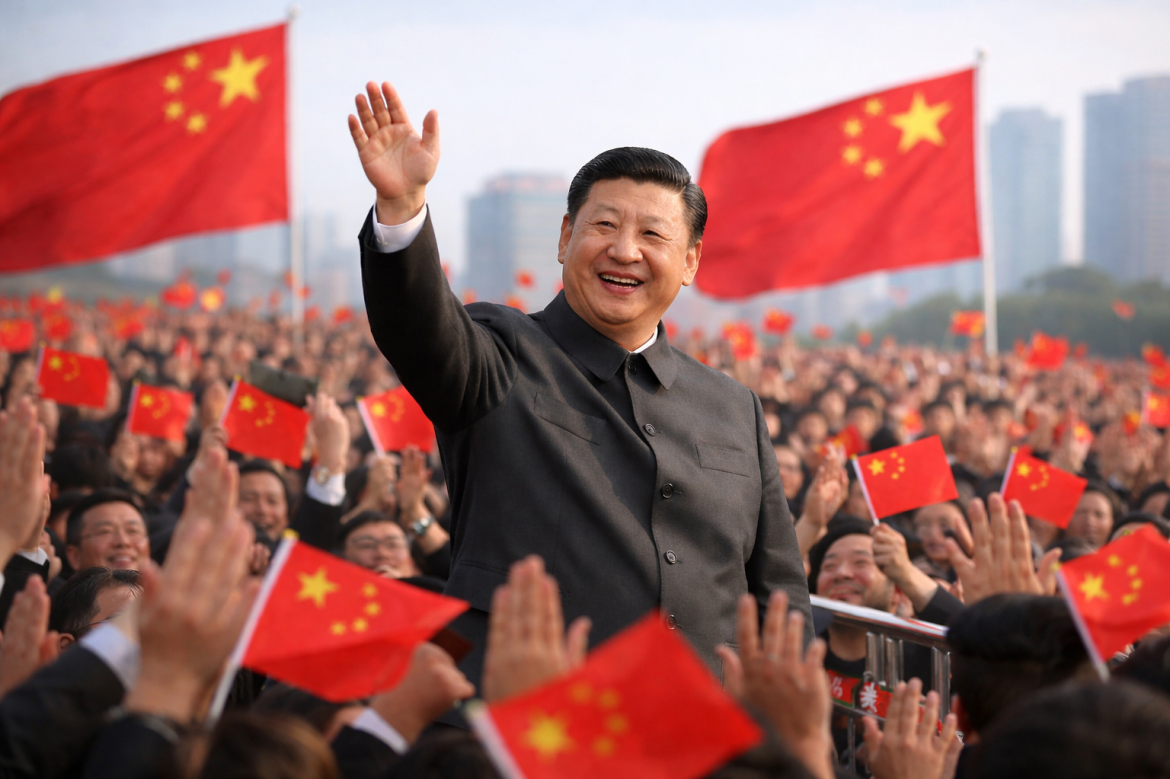
And with Xi hosting a celebration, it feels as if China is winning the tech race already.
A year that rewrote expectations
At the start of 2025, China’s tech outlook looked bleak. US export controls were tighter, foreign capital was scarce, and the property slump showed no sign of easing, and deflation dragged on profits.
By December, the narrative had flipped. China’s trade surplus crossed $1 trillion. Manufacturing exports rose even as shipments to the US fell sharply.
Official data showed factory activity returning to expansion in December, with the purchasing managers’ index at 50.1 after nine months below that line.
However, this rebound was not broad-based, but rather narrow and intentional.
The government leaned hard into industrial policy. Credit, subsidies, and procurement flowed to sectors linked to automation, electric vehicles, chips, and defense.
Consumption lagged behind, and investment outside state-backed areas stayed weak. The recovery was real, but it ran on a specific engine.
AI worked because it stayed close to factories
China’s strongest tech result in 2025 came from applied artificial intelligence.
While US firms chased larger models and higher benchmarks, Chinese firms focused on cost, speed, and deployment.
The goal was not to build the smartest system in the world, but to lower unit costs in manufacturing and logistics.
And that approach paid off. AI-driven automation spread across car plants, electronics factories, and ports.
“Dark factories” with minimal human labor became more common.
Design cycles shortened, inventory turnover improved, and these gains showed up in exports, not in consumer apps or ad revenue.
The symbol of this approach was DeepSeek. Its low-cost model stunned Silicon Valley early in the year by showing how far efficiency could go under hardware limits.
That event alone caused NVIDIA’s market cap to shed almost $600 billion within a single day.
The takeaway was that Chinese teams learned to do more with fewer chips.
Chips improved, but the ceiling stayed in place
Semiconductors were the centerpiece of Xi’s victory lap, and China did make progress.
Domestic chipmakers raised large sums through IPOs. Output rose in mature nodes. Memory and packaging have advanced. System-level engineering has improved, especially in AI servers designed around constrained hardware.
China’s tech-heavy Star 50 index has significantly outperformed the country’s main stock market index.
But the core constraint did not disappear. Advanced lithography tools remained out of reach. Leading-edge logic stayed behind global frontiers.
Although China did narrow the gaps in areas where scale and engineering depth matter, it did not break through where physics, equipment, and supply chains still favor incumbents.
This means that China can now support large parts of its AI and industrial base without foreign chips, but it cannot yet lead the frontier.
Exports hid a weak profit picture
On the surface, 2025 looked like a banner year for China’s growth, but profitability does not agree yet.
Industrial profits fell 13.1% year on year in November, according to official data. High-tech manufacturing profits rose around 10%, while most other sectors saw declines.
Deflation played a role. Prices stayed weak, so firms competed on volume, not margin.
Tech-linked exporters sold more units but earned less per unit. That is sustainable for a time, especially with state backing. It is harder to sustain without rising household demand or pricing power.
This gap explains why policymakers kept pushing stimulus into investment and trade-in programs rather than relying on organic demand.
The tech engine ran hot, but the rest of the economy did not.
The geopolitical win had limits
China also scored points on the global stage. It stood its ground against Donald Trump during a renewed trade clash.
It used rare earth leverage, it redirected exports to Southeast Asia, the Middle East, and Latin America. By year’s end, tensions eased into a one-year truce.
Still, the costs were visible. Exports to the US fell nearly 20%. Political risk rose in Europe. Trade defenses followed Chinese goods into new markets.
China won room to breathe, but did not secure a stable external environment.
Advanced manufacturing depends on global demand. AI hardware relies on complex supply chains. A strategy built on exports and state support works best when global politics stay calm.
That condition is not guaranteed.
Why Xi ran the victory lap anyway
Xi’s speech was less about bragging and more about signaling.
It told local officials that tech and industry remain the priority. It told engineers and investors that the state stands behind them.
It told foreign rivals that pressure has limits.
On those terms, the message made sense. China in 2025 showed it can adapt under constraint. It showed depth in engineering and scale in deployment. It avoided the collapse many predicted.
The risk lies in believing the story too much.
Tech progress cannot replace weak household income growth. AI-driven factories cannot solve deflation alone.
Semiconductor advances below the frontier do not end dependence. The victory lap highlighted real achievements. It also glossed over the fragility underneath.
China did not dominate tech in 2025. It proved it cannot be pushed out of the race. That is a meaningful result. It is not a final one.
The post Did China really dominate tech in 2025? Why Xi’s victory lap may be premature appeared first on Invezz