
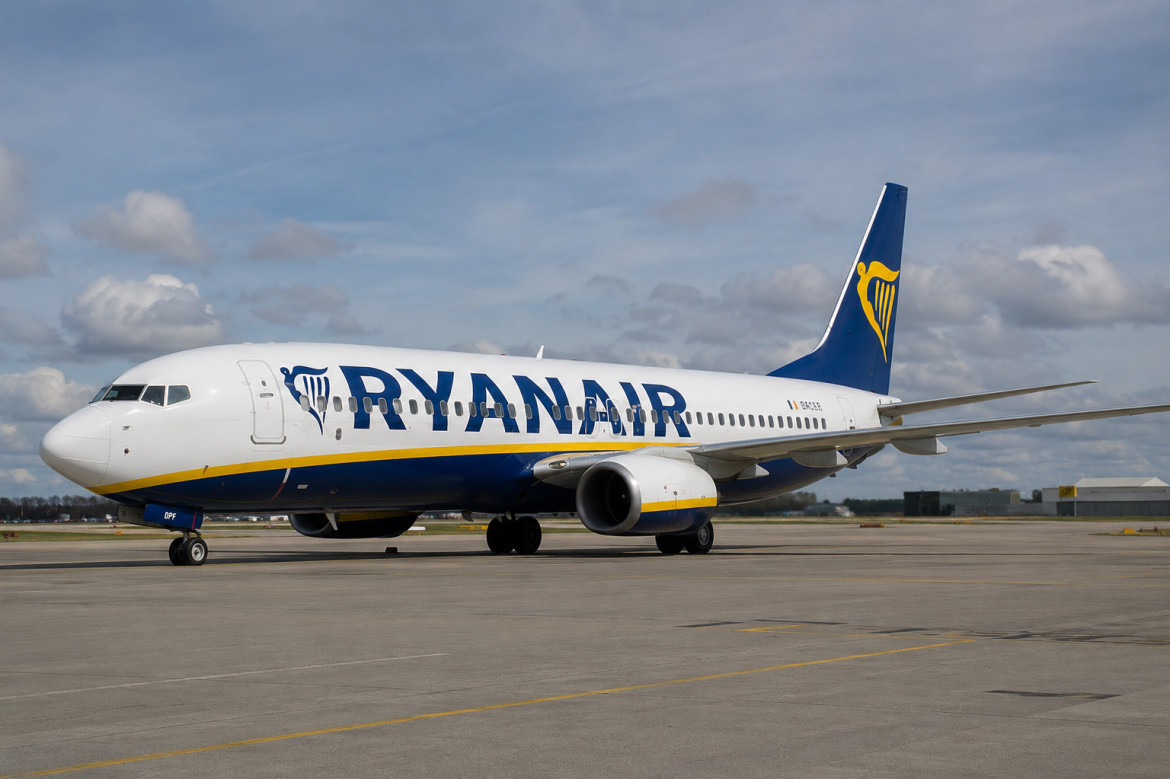
Ryanair Q1 profit misses estimates as lower fares weigh on earnings
Ryanair reported first-quarter earnings that missed analyst expectations, as lower ticket prices and higher fuel costs weighed on profitability despite continued growth in passenger traffic.
The low-cost airline posted a 34% year-on-year decline in after-tax profit for the April to June quarter, with earnings falling to €538 million ($615.3 million) from €820 million a year earlier.
Ryanair’s shares were down 5.6% shortly after markets opened.
The airline also warned that average summer fares are expected to remain modestly below last year’s levels amid uncertainty linked to the conflict in the Middle East.
Lower fares offset passenger growth
Ryanair carried 61.3 million passengers during the quarter, representing 6% traffic growth from the same period a year earlier.
According to the company, lower fares were required to stimulate demand during the quarter.
In Q1, revenue rose 1% to €4.38 billion.
Scheduled revenue dipped 1% to €2.91 billion as traffic grew 6%, but at 6% lower fares.
Q1 fares required stimulation due to the Middle East conflict, which led to consumer hesitancy, concerns about EU jet fuel shortages, economic uncertainty, and later bookings.
Operating costs increase
Operating costs increased 11% to €3.81 billion during the quarter.
The company said unit costs rose 5%, largely because prices for its 20% unhedged jet fuel more than doubled during the quarter to $150 per barrel.
Ryanair also noted that supplier compensation ceased after the delivery of its final B-8200 “Gamechanger” aircraft in February 2026.
The airline highlighted its fuel hedging strategy, saying it continues to protect against oil price volatility.
For fiscal 2027, the company said 80% of its fuel requirements are hedged at approximately $67 per barrel, while 15% of fiscal 2028 fuel needs are now hedged at around $85 per barrel.
During the quarter, Ryanair added three new operating bases in Rabat, Tirana and Trapani, alongside launching 130 new Summer 2026 routes.
The airline also repaid its final €1.2 billion bond in May, leaving the group debt-free.
Middle East conflict weighs on bookings
Chief Executive Michael O’Leary said lower fares reflected weaker consumer confidence during the quarter.
First-quarter average fares were 6% lower than the same period last year.
O’Leary said,”as the Middle East conflict led to consumer hesitancy, concerns about EU jet-fuel shortages, economic uncertainty and later bookings.”
The airline had previously indicated in its May quarterly results that it was discounting some fares to maintain passenger volumes amid uncertainty linked to the conflict.
Summer pricing outlook remains cautious
Looking ahead, Ryanair said pricing trends remain under pressure despite some improvement in demand.
“Despite a recent, slight uptick in volumes, and less price stimulation, Q2 pricing is trending modestly down year-on-year, and the final H1 fare outcome is heavily dependent on the strength of close-in bookings in August and September,” O’Leary said.
The company said demand over the remainder of the first half of the financial year will largely depend on late bookings during August and September, while average summer fares are expected to remain modestly below last year’s levels.
The post Ryanair Q1 profit misses estimates as lower fares weigh on earnings appeared first on Invezz